
The Main Content Categories on OnlyFans Explained
OnlyFans splits its creator content into distinct niches — fitness, cosplay, lifestyle, cooking, ASMR, couples, and specialty categories — and the niche you pick determines what you will pay, how often a page posts, and whether the subscription is worth keeping. A fitness page posts training routines on a schedule, a cosplay page invests in costumes and slower production, and a couples page prices differently from a solo lifestyle vlog. Knowing the category before paying is the single most useful filter a subscriber has.
This guide explains why categories matter before you subscribe, what the main niche groups contain, what each one typically costs, how creators structure content inside a page, how free and paid pages differ, and how to use rankings and a budget to pick pages that stay active.
Why Categories Matter Before You Pay
OnlyFans hosts fitness, cosplay, lifestyle, cooking, ASMR, couples, and specialty niches, and the niche shapes both the price and the posting style of every page in it. The platform has no category browser, no recommendation feed, and search that only works for names you already know. That means a subscriber chooses a niche first and a page second, because discovery happens off-platform through social media, forums, and ranking sites.
Picking a category first also protects your budget. Two pages at the same price can deliver completely different posting rhythms depending on the niche, so the price tag alone tells you almost nothing. The category tells you what a normal month of content looks like, and that is what you are actually buying.
The Main Niche Groups
Most paid pages fall into a small set of recognizable groups. Each group has its own production style and audience expectations.
- Fitness and training content — workout plans, form breakdowns, and progress posts on a regular schedule.
- Cosplay and character content — costume builds and themed photo sets with slower, higher-effort production.
- Lifestyle and day-in-the-life vlogs — casual daily updates that trade polish for frequency.
- Cooking and hobby streams — recipe walkthroughs and skill content aimed at a specific interest.
- ASMR and relaxation content — audio-focused recordings with consistent themes and lengths.
- Couples pages — two-creator accounts with shared posting and joint pricing.
- Specialty niches — dedicated-audience categories such as GFE-style personal content or feet content, where loyalty runs high and audiences are narrower.
What Each Category Typically Costs
Most paid pages sit between $4.99 and $15 per month, and the mid-market majority charges between $6 and $10. Base subscriptions never go below $4.99 and cap at $49.99; only promotional first months and trials can drop lower, and renewal always reverts to the full price. First-month discounts commonly run 30 to 70 percent, and bundles of 3, 6, or 12 months reduce the monthly rate.
| Category | Typical price behavior | What drives the price |
| Fitness | Sits in the $6–$10 mid-market band | Program depth, posting schedule, and creator credentials |
| Cosplay | Often mid to upper range | Costume and production effort per set |
| Lifestyle | Frequently at the lower end | Posting frequency and audience size |
| ASMR | Mid-range with steady renewals | Audio production quality and release consistency |
| Couples | Often above the solo average | Two creators producing shared content |
| Specialty niches | Wide spread up to the $49.99 cap | Custom content availability and a dedicated niche audience |
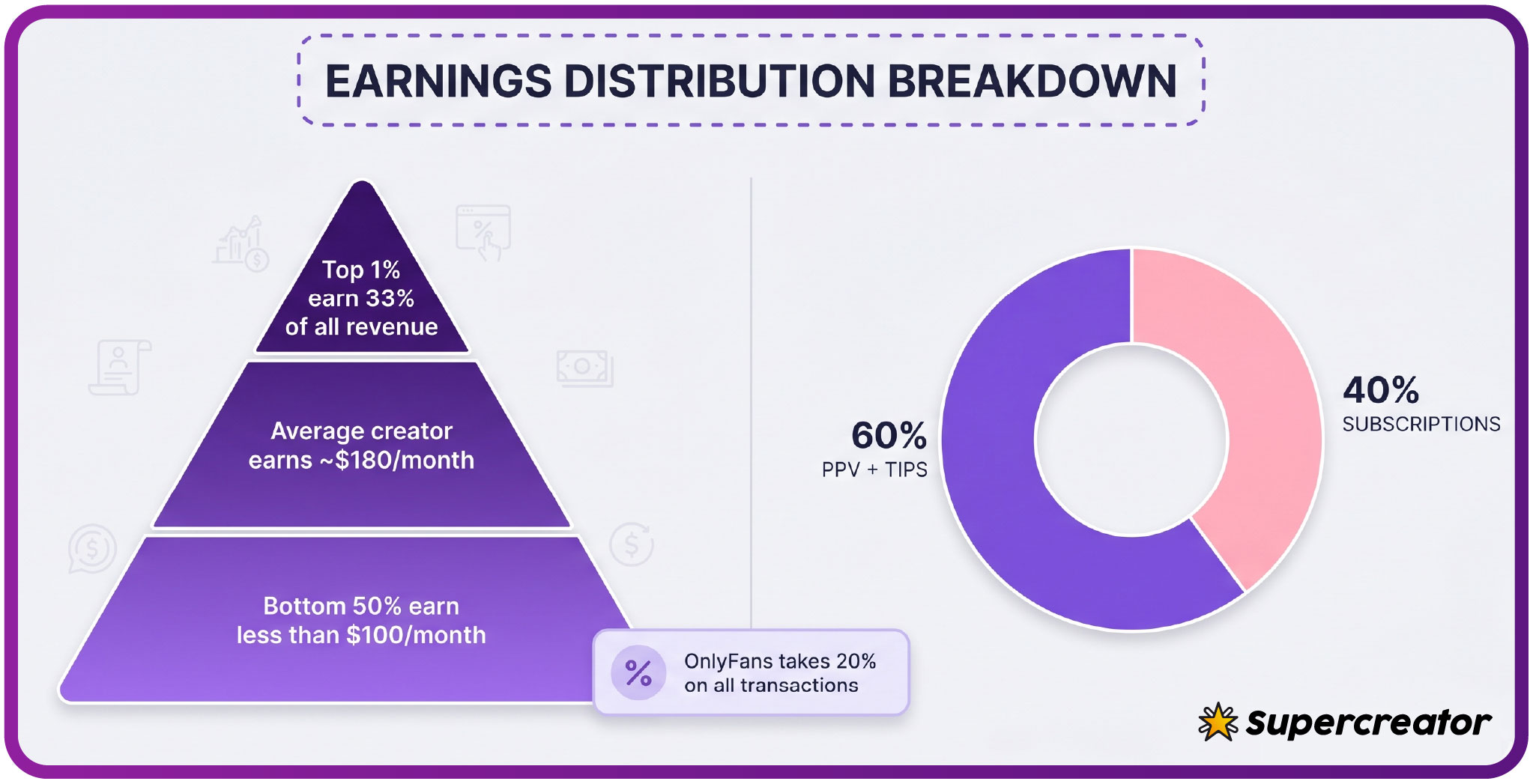
Remember the platform split when you judge prices: OnlyFans keeps 20 percent of everything and the creator receives 80 percent. A creator who raises a price stops your automatic renewal, and your existing access lasts through the paid period until you accept the new rate or subscribe again.
How Creators Structure Content Inside a Page
Creators across every niche organize their output into the same five content groups. Recognizing them helps you read a page before you pay.
- Teaser posts — public or low-barrier content that works as discovery and shows what the page offers.
- Personality posts — casual updates that build trust and keep subscribers between major releases.
- Interactive content — polls, questions, and reply threads that drive engagement.
- Premium posts — the main paid material, delivered through the subscription feed or as pay-per-view.
- Custom content — material negotiated per request for high-value fans, priced separately.
Practical warning: a promotional first month below $4.99 always renews at the full price. Check the standard rate on the profile before you subscribe, and treat any bundle as a commitment only after one full paid month.
Free Pages Versus Paid Pages in Each Niche
Free pages set the subscription price to $0 and earn through pay-per-view messages and tips, using the feed as a storefront. Paid pages charge the subscription up front and may still send pay-per-view messages on top. The right choice depends on whether you prefer paying per item or paying once for feed access.
| What you get | Free page | Paid page |
| Feed access | Yes — open at $0, acts as a preview storefront | Yes — included in the subscription |
| Pay-per-view messages | Yes — the main revenue source | Often — on top of the subscription |
| Tips expected | Yes — a primary earning channel | Optional — for customs and extras |
| Typical subscription range | $0 | $4.99 to $49.99, mostly $4.99 to $15 |
Free pages work well as a trial for a niche you have not explored. Paid pages suit subscribers who already know the category and want predictable access without per-message decisions.
How to Choose a Category Page Worth Paying For
A short checklist applied before every subscription filters out most disappointing pages. Run these checks in order.
- Confirm the niche matches what you actually want, not just what the teaser suggests.
- Compare the price against the $4.99 to $15 norm for paid pages.
- Use likes and media count as volume signals — likes are cumulative and favor older pages, while media count shows archive size.
- Check the last post date for freshness before paying anything.
- Compare the page across independent ranking lists rather than trusting a single position.
Independent directories make this faster because they compile public profile data into one view. For example, browsing only fans most popular category rankings helps you see which pages in a niche stay active month after month. Ranking services compare public profile prices, promotions, activity, and media counts side by side, which removes most of the manual checking.

Reading Rankings by Category
Ranking sites such as BestOnlyFans sort profile cards by category, price, likes, and recent activity, so you can scan a whole niche in minutes. Overlap between independent rankings is a stronger signal than any single list’s position, because a page that appears on several lists earns that placement repeatedly. The BestOnlyFans cards are sortable, which lets you filter one category by freshness instead of raw popularity.
A category ranking card typically shows:
- The category tag the page is listed under.
- The current subscription price and any active promotion.
- The cumulative like count.
- The media count as a measure of archive size.
- The last post date as a freshness check.
Because likes accumulate over time, an old inactive page can still look impressive on that one metric. Checking the top ten onlyfans listings across categories shows which pages hold their position over time rather than coasting on history. Cross-referencing those placements against the BestOnlyFans category view gives you the overlap signal that a single list cannot provide.
Setting a Category Budget
Niche hopping is the easiest way to overspend, because every category has a free page or a promo that looks harmless on its own. A few fixed habits keep the total predictable.
- Cap how many paid pages you keep per niche — one or two is enough in most categories.
- Start with one month before committing to any 3, 6, or 12 month bundle.
- Track pay-per-view messages and tips separately from subscription costs, since they add up silently.
- Cancel pages that stop posting; the last post date is your trigger, not the price.
- Recheck your active subscriptions monthly against the $4.99 to $15 norm to catch quiet price increases.
A creator price increase stops automatic renewal rather than charging you more without consent, so a monthly review catches changes early. Access you already paid for runs to the end of the period either way.
FAQ
Which content groups sit among the higher-earning ones?
Fitness, cosplay, ASMR, and couples pages rank among the highest-earning niche groups, alongside lingerie and boudoir content. High earnings reflect production effort and audience loyalty rather than a guaranteed quality level for any single page.
Can one creator mix several categories?
Yes. A creator can combine fitness with lifestyle posts or cosplay with ASMR, and many do. Check that the mix still centers on the niche you want before subscribing, since a scattered feed usually means less of each category.
Does the category affect the subscription price?
Yes. Production-heavy niches like cosplay and couples pages tend to price above the $6 to $10 mid-market, while lifestyle pages often sit at the lower end. All base prices stay within the platform’s $4.99 to $49.99 range regardless of niche.
How do I find a niche when the platform has no search?
OnlyFans search only works for names you already know, so discovery happens off-platform. Use social media, forums, and ranking directories that sort pages by category, price, and activity to find active pages in the niche you want.